
Analysis of the technical principles and differences in types of high-frequency RFID antennas: From 13.56MHz near-field coupling to WELLAUTO industrial solutions
September 18, 2026 304
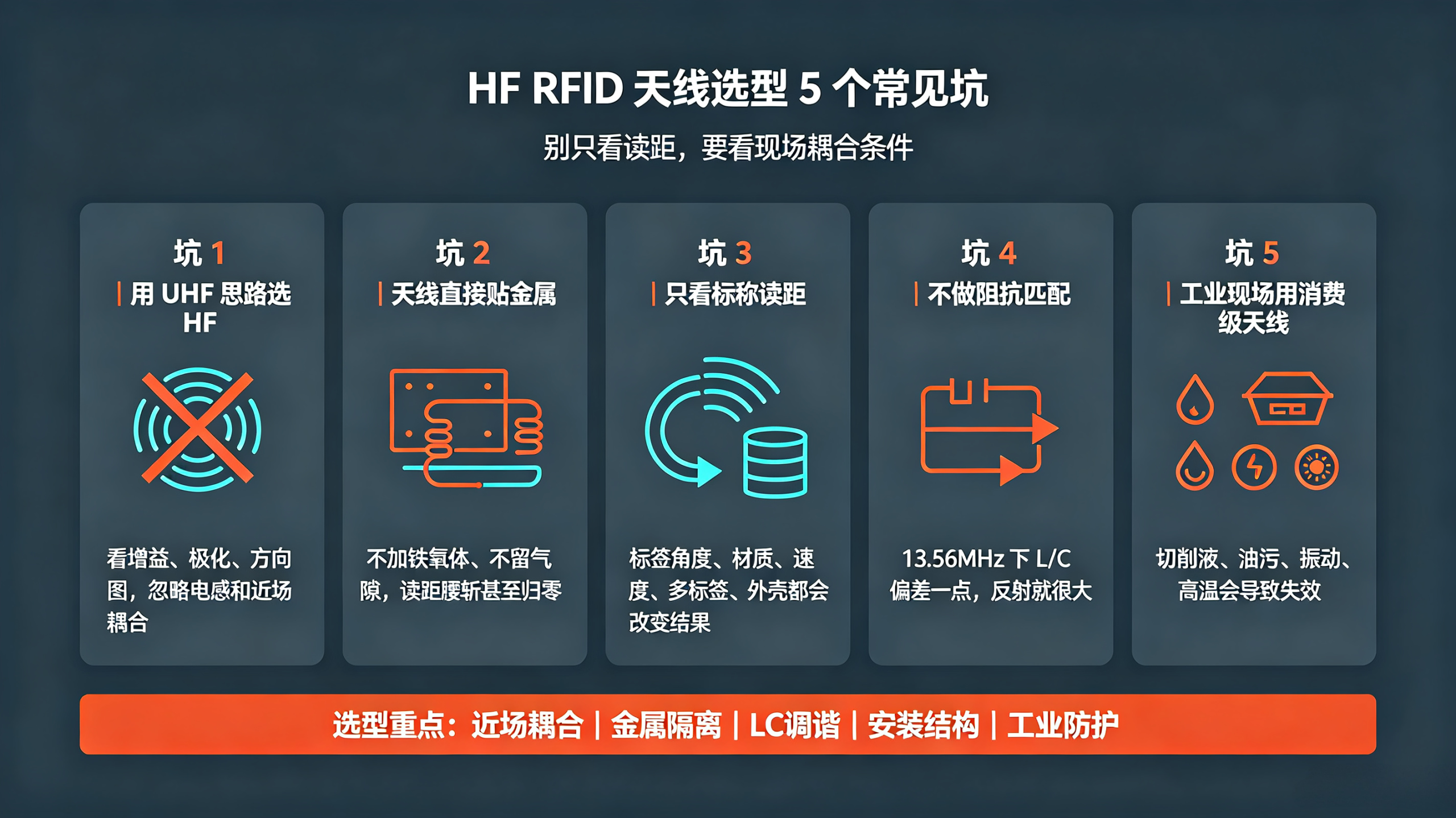
I. Introduction In scenarios such as intelligent manufacturing, automotive assembly, CNC tool management, and 3C precision assembly, RFID is no longer just "access card technology," but rather the "first point of contact" in the industrial data link. Among them, high-frequency RFID (HF, 13.56MHz) has become one of the main frequency bands in industrial identification due to its relatively friendly nature to metal environments, mature protocols, and stable short-range identification. However, many engineers make a mistake when selecting RFID antennas: treating HF RFID antennas as UHF antennas—looking at gain, polarization…

The "Invisible Steward" of the Workshop: Understanding High-Frequency RFID and Enabling Production Lines to "Speak for Themselves"
September 11, 2026 388
In the wave of Industry 4.0 and smart manufacturing, is your production line still relying on manual barcode scanning? Are defective products caused by chaotic tool life management? Is production delayed because molds cannot be found? If industrial identification is the "eye" of a smart factory, then high-frequency RFID (13.56MHz) is definitely the sharpest eye in that pair. However, many engineers struggle with the selection process: with ISO 14443 and ISO 15693 standards everywhere, how do you choose? Are the "custom protocols" advertised by manufacturers just a waste of money? Today, let's set aside the obscure jargon…
How exactly does the size of a high-frequency RFID block affect your system? This article explains the principles in detail and also discusses which industrial-grade tags to choose
August 21, 2026 575
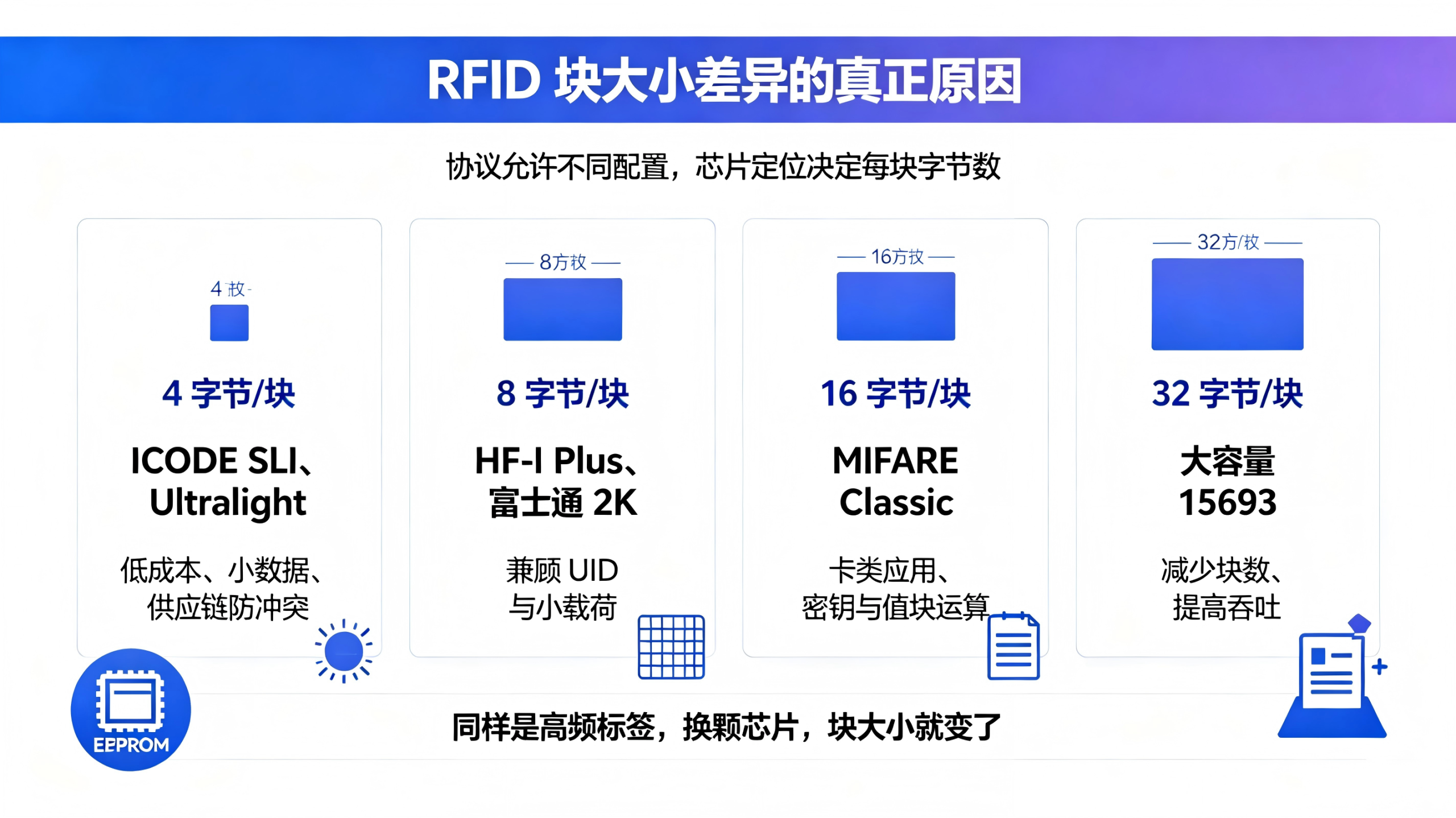
When working on RFID projects, many people only focus on "capacity and range," neglecting a hidden but crucial parameter—block size. In the 13.56MHz high-frequency band, you'll see tags with sizes ranging from 4 bytes/block to 8 bytes/block, while MIFARE Classic uses 16 bytes/block. This isn't arbitrary; it directly determines your read/write speed, data layout, production line cycle time, and even after-sales rework rate. I. What exactly is block size: the "minimum" block size for high-frequency tags…
Is 200℃ just the starting point? Unveiling how the temperature resistance rating of industrial high-frequency RFID determines the survival of a production line
August 12, 2026 523
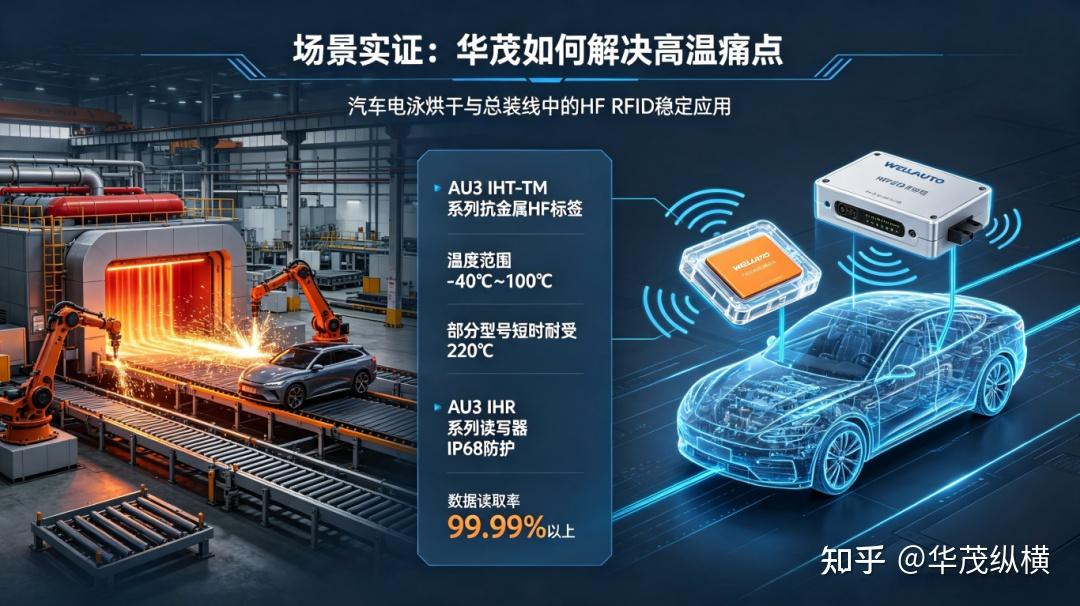
In automotive welding workshops, each precise spot weld by a robotic arm is accompanied by instantaneous heat radiation exceeding 180°C; in food and beverage production lines, empty bottles must undergo high-temperature washing and sterilization at over 150°C before entering the filling process; and in semiconductor wafer manufacturing, temperature fluctuations within the process chamber are commonplace. Many people believe that the core competitiveness of industrial RFID lies in reading distance or communication speed, but in real industrial settings, temperature resistance is the first hurdle determining whether an RFID system can "survive." Today, we'll break down the temperature resistance of high-frequency RFID based on front-line engineering practice…
The Game of Milliseconds: In-Depth Analysis of Factors Affecting Industrial HF RFID Read/Write Speed and WELLAUTO 's Efficient Solution
August 7, 2026 563
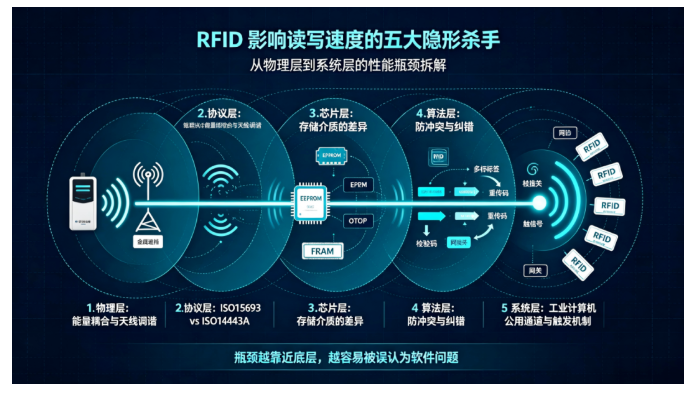
In Industry 4.0 smart factories, RFID is like the "nerve endings" of equipment. However, many engineers are puzzled: why is my production line's read/write speed so incredibly slow, even with a nominal frequency of 13.56MHz? Why does it frequently report errors in complex environments? The read/write time of industrial high-frequency (HF) RFID is never a fixed value; it's a "millisecond-level game" involving hardware performance, environmental media, and communication protocols. Today, we'll delve into the core factors affecting read/write speed and see how WELLAUTO wins this game…
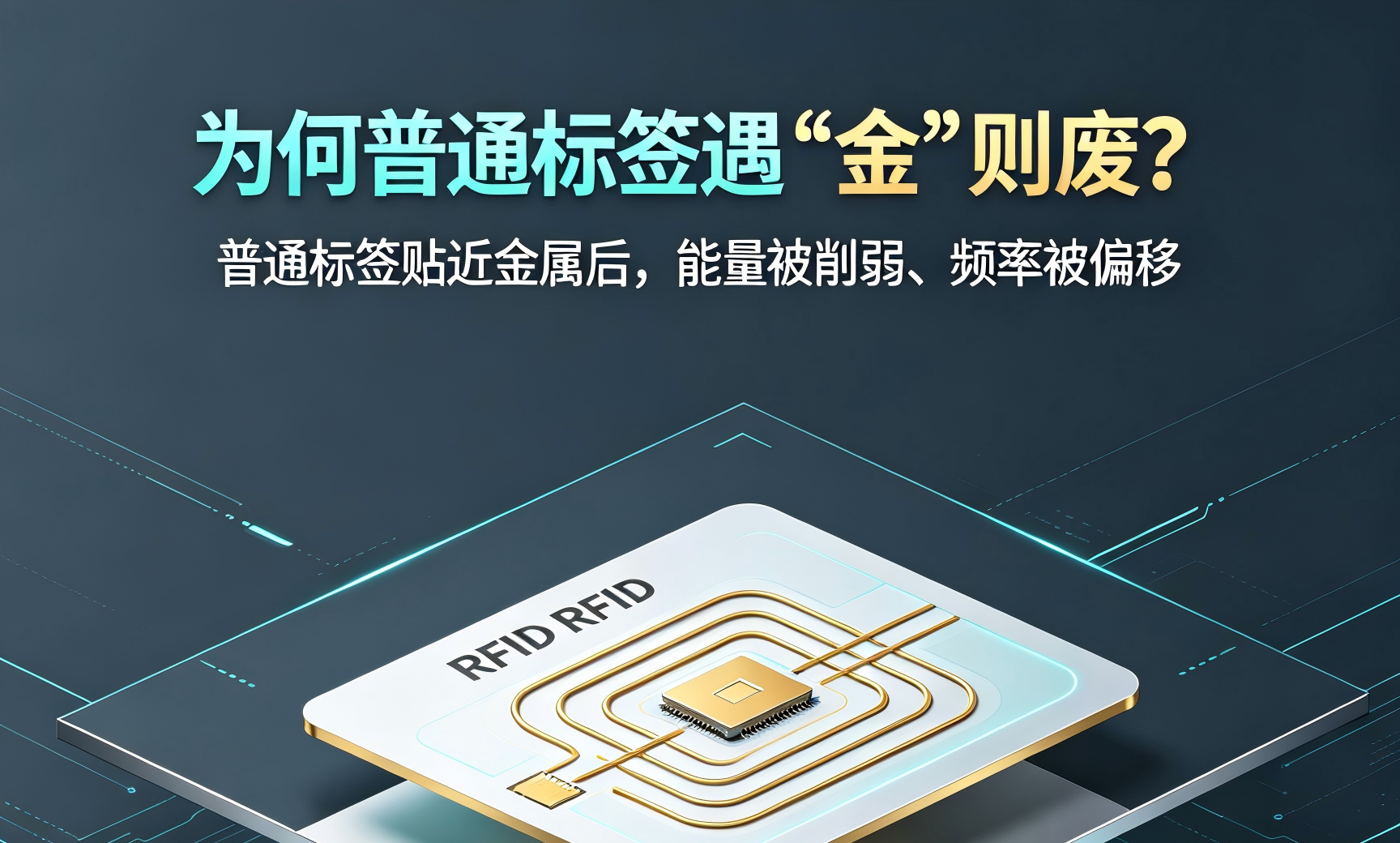
From Eddy Current Suppression to Microstrip Patches: In-depth Analysis of the Differences in the Principles of Anti-Metal RFID Tags, and a Discussion of the Advantages of WELLAUTO Industrial-Grade Solutions
July 24, 2026 722
In the practical implementation of Industry 4.0, RFID technology serves as the "eyes" for achieving end-to-end traceability. However, when these "eyes" encounter the ubiquitous metal in factories—whether it's CNC machine tool cutting tools, injection molding molds, or the metal pallets of AGV carts—they often become instantly "blind." Why do ordinary RFID tags struggle to move on metal surfaces? How do anti-metal tags solve this problem through special electromagnetic field manipulation technology? This article will start from the underlying electromagnetic principles, deeply compare the technical differences between anti-metal and non-anti-metal tags, and analyze WELLAUTO …
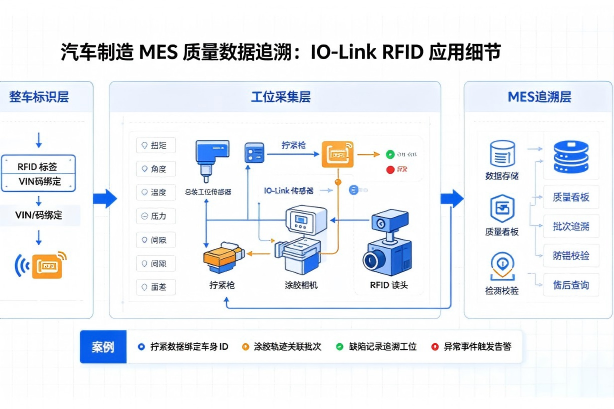
MES Quality End-to-End Traceability | WELLAUTO IO-Link RFID Automotive Manufacturing Production Line Identification and Quality Control Solution
July 17, 2026 839
Automotive OEMs' welding, painting, and final assembly workshops face harsh conditions such as mixed production lines for multiple vehicle models, high-speed continuous operation of skids, and splattering welding slag and oil. Traditional barcodes are prone to contamination and failure, while dedicated bus RFID suffers from drawbacks such as numerous gateways, large node footprint, and cumbersome debugging. WELLAUTO IO-Link Master + IO-Link HF RFID reader/writer system makes vehicle identification, process error prevention, and quality data traceability as simple and reliable as connecting sensors. I. IO-Link RFID Configuration Network Principles (Automotive Production Line Perspective) WELLAUTO …
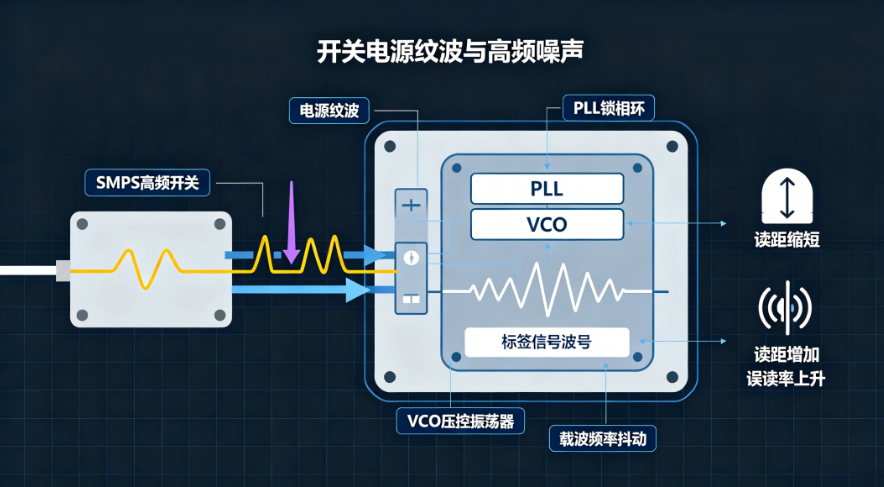
The overlooked hidden dangers: Power supply interference mechanism and immune design of industrial high-frequency RFID readers
July 6, 2026 928
In industrial automation, when discussing RFID "interference resistance," most focus is on interference between the radio frequency (RF) terminal and metal (such as detuning caused by tags being attached to metal). However, a deeper hidden danger is often overlooked—interference from the power supply system. For industrial-grade high-frequency RFID (HF 13.56MHz) readers, the power supply is not only the energy source but also its "heart." Once the power supply quality deteriorates, even with the best RF algorithm, the reader will experience "arrhythmia"..
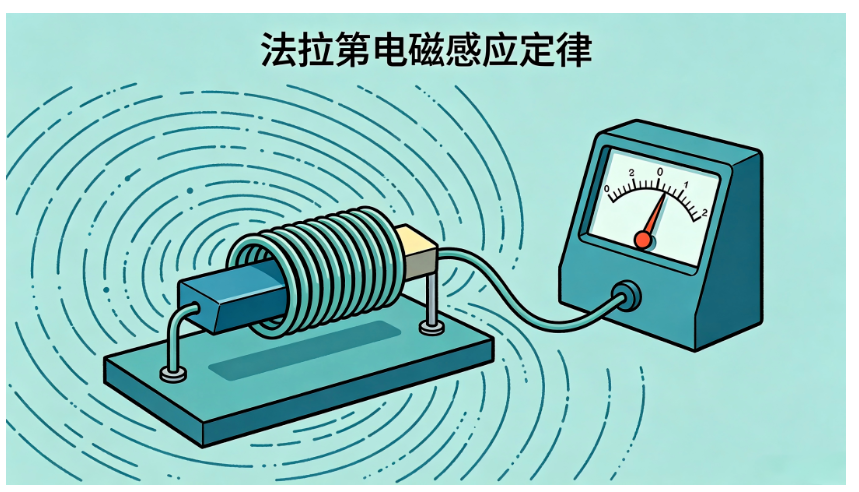
Cracking the "Magnetic Field Code" of High-Frequency RFID: The Size Game Between Antennas and Tags and the Truth About Sensing Distance
June 18, 2026 807
In the precise world of industrial automation, RFID technology is often likened to the "touch" of machines. However, in actual selection, engineers often fall into a classic misconception: to increase the sensing distance, is it better to simply make the reader antenna and tag as large as possible? The answer is no. In the field of 13.56MHz industrial high-frequency RFID, sensing distance (coupling distance) is not a simple linear addition, but a complex balance determined by the physical nature of inductive coupling. Today, we will start from…

WELLAUTO – Penetrating Oil and Dust: How Industrial High-Frequency RFID is Reshaping Production Line "Sensing Capabilities"
June 4, 2026 944
In WELLAUTO 's smart factory blueprint, the efficiency of data flow determines the upper limit of production. However, in real workshops, barcodes are easily covered by cutting fluid, QR codes are worn away by welding slag, and manual data entry is not only inefficient but also prone to errors. As traditional visual recognition encounters bottlenecks, industrial high-frequency RFID (Radio Frequency Identification) is becoming the preferred solution for an increasing number of automation engineers. It doesn't rely on "seeing," but on "sensing." Industrial high-frequency RFID operates in the globally common 13.56MHz ISM band…

From WWII identification to smart factories: WELLAUTO RFID, enabling industrial data to "speak"
May 29, 2026 1,262
In the wave of Industry 4.0, every screw, every cutting tool, and every operating piece of equipment generates massive amounts of data. To ensure this data can be accurately captured, traced, and managed, a core underlying technology is indispensable—RFID. I. What is RFID? RFID stands for Radio Frequency Identification. It is a simple wireless, non-contact automatic identification technology that automatically identifies target objects and obtains relevant data through radio frequency signals, without the need for manual intervention…
![[Application Case] Bus busbar + 500E solution applied to packaging equipment](https://www.wellauto.net/wp-content/uploads/2026/04/2026042908394848.png)
[Application Case] Bus busbar + 500E solution applied to packaging equipment
April 29, 2026 1,074
Packaging needs to be tailored to different product characteristics and market demands, selecting appropriate materials and design schemes to place products into specific containers, bags, boxes, bottles, and other packaging materials. The core purpose is to protect the product and reduce damage during transportation, display, and sales. Pain Point 1: Cumbersome Wiring. Traditional solutions involve a main control cabinet and five independent control cabinets, resulting in relatively long cabling. Running all signal cables to the main cabinet is not only time-consuming and labor-intensive but also increases costs. WELLAUTO's solution using a bus busbar + AU7 500E only requires laying power and network cables; each independent unit…