The overlooked hidden dangers: Power supply interference mechanism and immune design of industrial high-frequency RFID readers
Solution July 6, 2026
In industrial automation, when we talk about RFID "interference immunity," most of our attention focuses onthe interference between the radio frequency terminal and metal(such as detuning caused by tags being attached to metal). However, a deeper hidden danger is often overlooked—interference from the power supply system.
For industrial-grade high-frequency RFID (HF 13.56MHz) readers, the power supply is not only the energy source but also its "heart." Once the power supply quality deteriorates, even with the best radio frequency algorithm, the reader will experience "arrhythmia," manifesting asdata errors, intermittent disconnections, or even interface burnout.
I. Three "Hidden Killers" of Power Interference
The power grid environment in industrial settings is far more complex than in offices. Below are three of the most common power supply interference mechanisms affecting RFID readers:
1️Switching power supply ripple and high-frequency noise
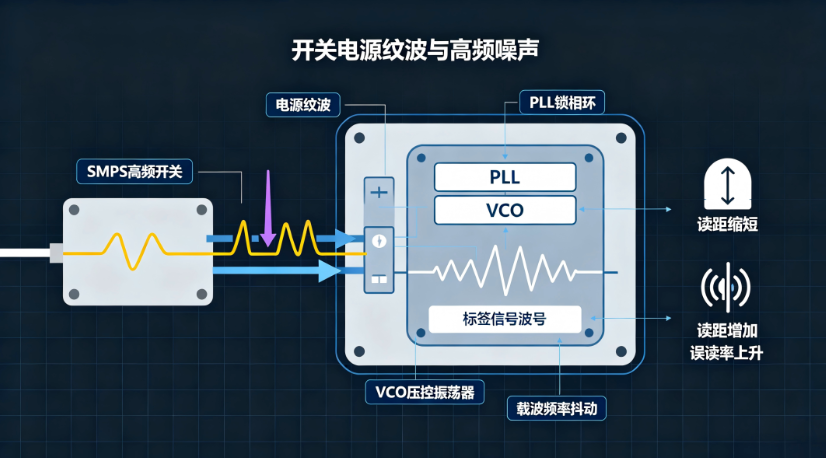
Industrial equipment uses a large number of switching power supplies (SMPS), which operate at high frequency switching states from tens of kHz to MHz. Inferior power supplies will produce obvious high frequency ripple noise.
• Interference Principle: HF RFID readers contain sensitive radio frequency transceiver circuits. Power supply ripple is conducted through the power line to the reader's PLL (Phase-Locked Loop) and VCO (Voltage-Controlled Oscillator), causingcarrier frequency jitter. Frequency instability directly causes the resonance point between the reader and the tag to shift, resulting in a decrease in reading distance and an increase in the false reading rate.
2️Back EMF of an inductive load
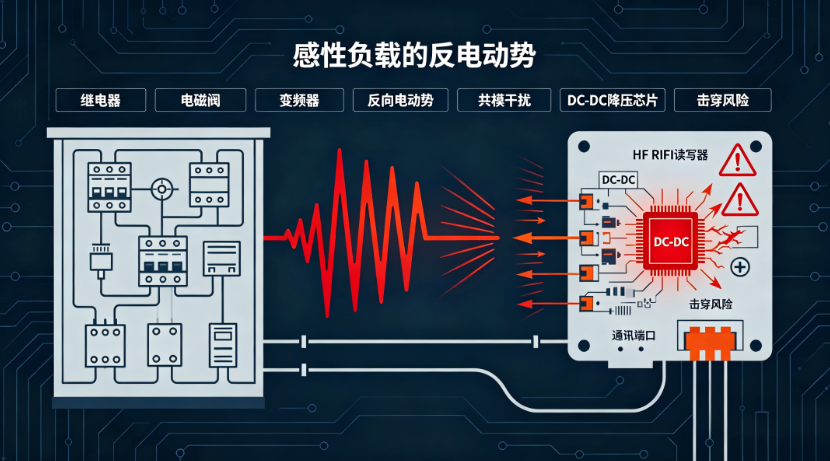
The production line is filled with relays, solenoid valves, contactors, and frequency converters
• Interference principle: When an inductive load is disconnected, a reverse electromotive force of up to several thousand volts is generated. This energy propagates along the power/ground lines incommon-mode interference. If a regular reader does not have sufficient absorption circuitry, it will directly damage the internal DC-DC step-down chip or communication port.
3️Ground potential difference and common-mode noise
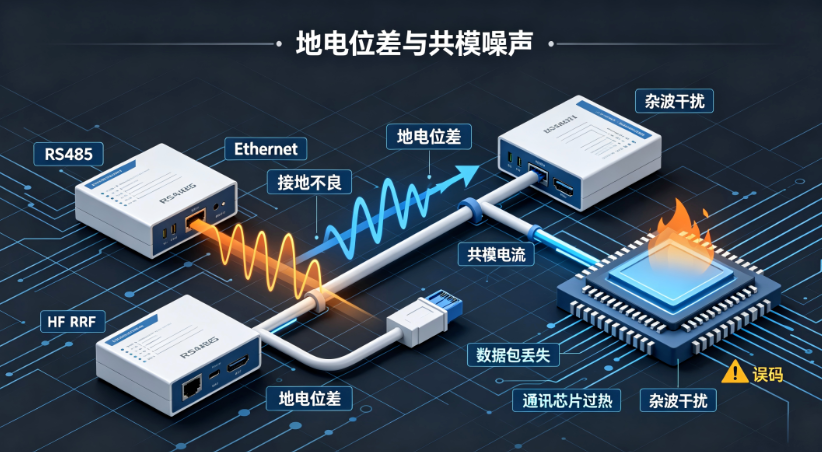
When multiple devices are networked (RS485 / Ethernet), there may be a potential difference between the devices due to poor grounding or long distances between them.
•Interference principle: Ground potential difference generates common-mode current on the communication line. For HF RFID readers,the communication interface must withstand not only data signals but also noise from the ground, leading to data packet loss and, in severe cases, overheating and burning out of the communication chip.
II.WELLAUTOAU3IHR Series – “Power-Immune” High-Frequency Reader
After understanding the above interference mechanism, there is only one core criterion for selecting a reader:whether its power supply and interface can survive and remain stable on a dirty power grid.
This is precisely the essential difference between WELLAUTO AU3 IHR series high-frequency reader and the traditional general-purpose reader
1. Power input terminal – Level 3 EMC in-depth protection (self-developed circuit)
WELLAUTOhas designeda professional-grade three-level protection architecture, rather than a simple LC filter:
| Protection level | Design content | effect |
| Level 1 π-type EMI filter | Input stage π-type filter network + common-mode choke | Filtering out MHz-level high-frequency ripple noise introduced by the switching power supply, purifying the carrier reference, and eliminating frequency jitter |
| Level 2 TVS surge clamp | High-power TVS transient suppression diode array (IEC 61000-4-5 Level 3/4) | PS-level response clamps the back EMF of the solenoid valve/relay and lightning-induced surges within safe voltage range |
| Level 3 Wide Voltage Isolated DC-DC | Independent isolated DC-DC module, supporting 18~30V DC wide voltage input | Even if the front-end power supply voltage fluctuates by ±20% or drops briefly, the output voltage remains stable, and the reader/writer does not drop frames or restart |
✅Results :In aging tests with frequent switching on and off of inductive loads,WELLAUTOreaderzero false triggers and zero resets, far exceeding the performance of ordinary commercial-grade readers.
2. Dual power supply architecture – balancing minimalist cabling with ultimate reliability
| Power supply mode | Design Features | Applicable Scenarios |
| PoE powered version (IEEE 802.3af/at) | Simultaneous power supply and communication via network cable; built-intransformer for magnetic isolation, naturally eliminating ground loops; supports centralized UPS backup for switches. | New production line, warehouse gantry, AGV vehicle-mounted system, and cable routing modification projects |
| Independent DC 24V power supply version | Industrial standard 24V wide voltage input, built-in reverse connection/overvoltage/undervoltage lockout; fully compatible with the wiring habits of similar products from IFM, Balluff, and Siemens | Workshops with high interference, reuse of old production lines, and critical workstations with high power redundancy requirements |
➡️User value: Within the same series, select according to your needs, without having to compromise between "cost-saving" and "industrial reliability".
3. Communication Interface – Fully isolated design to withstand ground potential differences
•Ethernet (POE version): Industrial-grademagnetic isolation transformerwith isolation voltage ≥1500Vrms, completely blocking common-mode noise from entering the reader's logic ground through the network cable.
•RS485 / IO-Link / RS232: Key signal lines are configured withopto-isolationto physically disconnect the reader signal ground from the external device ground, preventing ground loop current from damaging the interface chip.
•Shielded enclosure grounding design: The metal enclosure is reasonably separated from the internal digital ground, and high-frequency interference current is discharged through single-point grounding of the enclosure.
4. Rigorous environmental verification – not just parameters, but also real-world testing
WELLAUTO AU3 IHR series has passed the following industrial-grade tests:
•✅ EFT (Electrical Fast Transient Burst): ±2kV (signal line) / ±4kV (power line), IEC 61000-4-4
• ✅ Surge Immunity: ±2kV (line-to-line) / ±4kV (line-to-ground), IEC 61000-4-5
•✅ ESD (Electrostatic Discharge): ±8kV (contact) / ±15kV (air), IEC 61000-4-2
•✅High temperature and high humidity & 1.2m free fall: -20~+75℃, continuous operation without abnormalities
Inautomotive welding workshops (with strong arc light and high current switching)and3C precision testing stations (with high-precision analog environments), the AU3 IHR reader achieves 24/7 uninterrupted and stable operationwithout the need for additional expensive external isolation barriers.
5. Performance and Compatibility – Not only must it be able to withstand heavy loads, but it must also be able to read data quickly
• Supports the full ISO15693 protocol
• Maximum read/write speed of1500 Bytes/s, supports writing large-capacity FRAM code body parameters.
• IP68 protection rating , all-metal or high-strength engineering plastic housing
• Bus compatibility withProFiNet, EtherNet/IP, EtherCAT, CC-Link IE, IO-Link, Modbus TCP/RTU
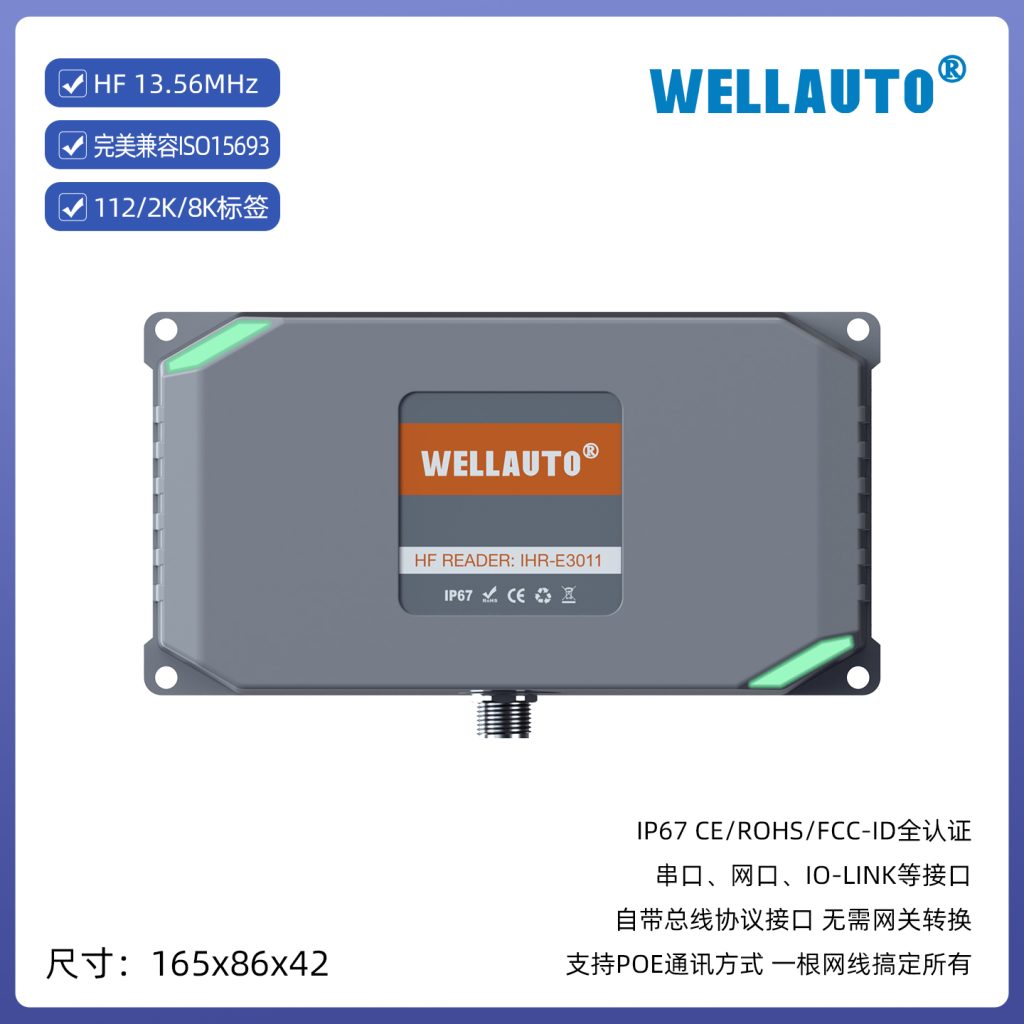
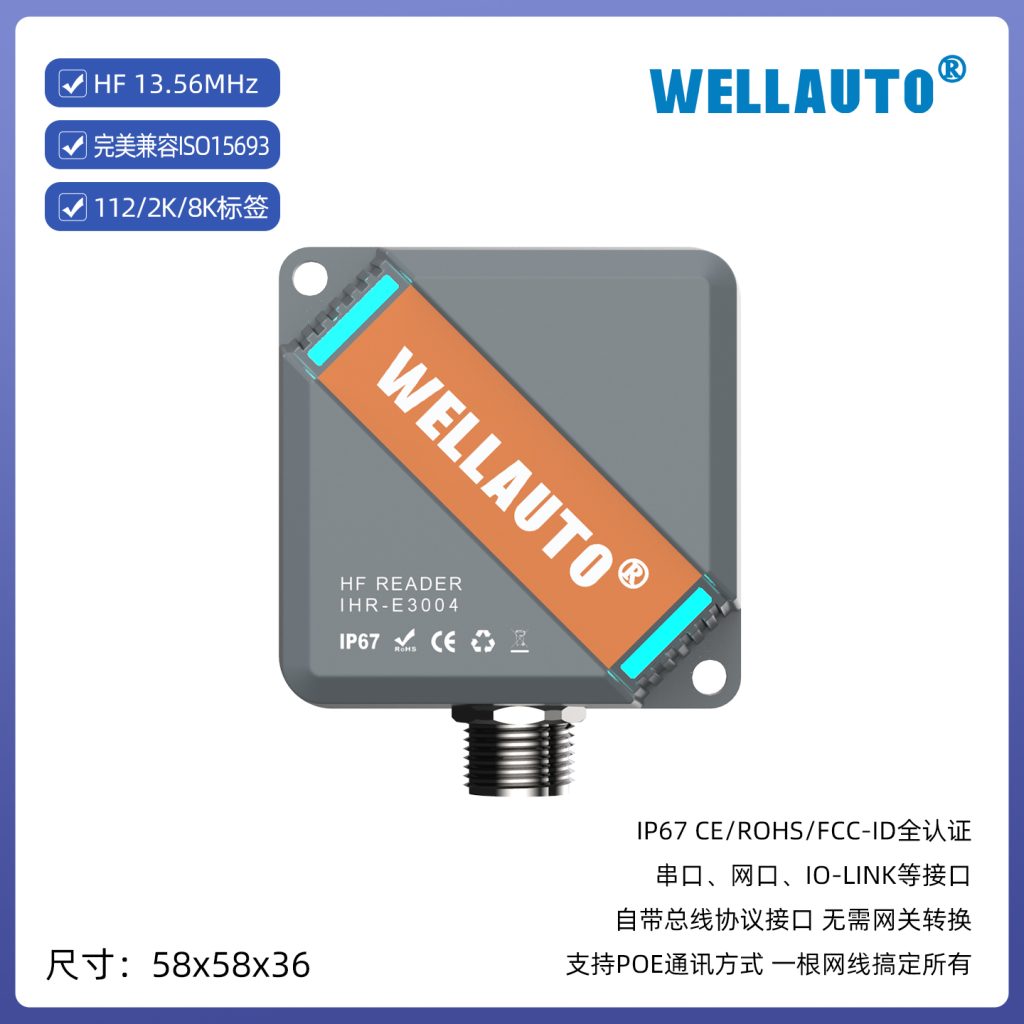
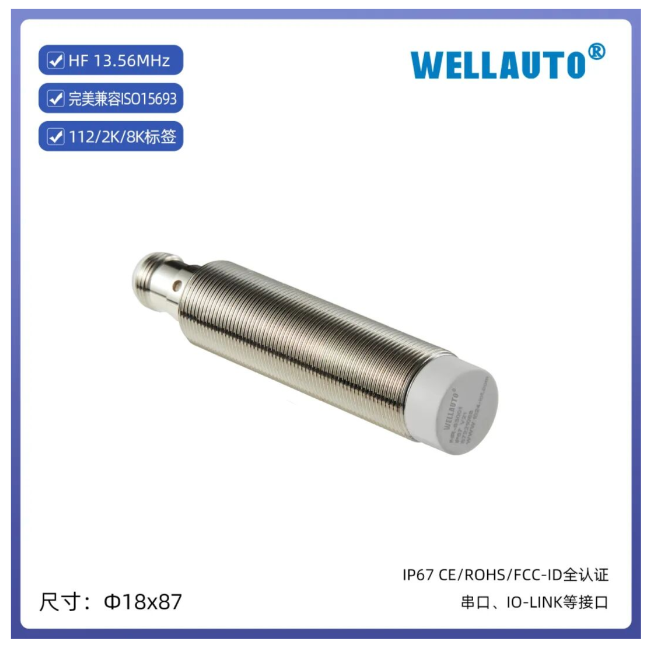
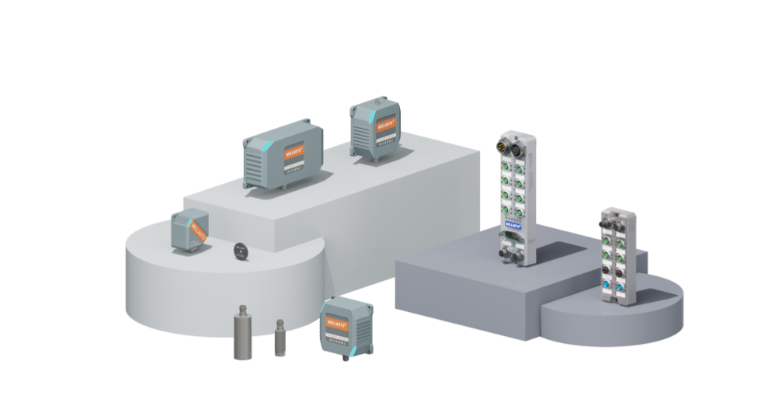
Representative models:AU3 IHR-3001/3002 (cylindrical integrated type),AU3 IHR-3004/3006 (square integrated type, POE/DC dual power supply),AU3 IHR-3007 (external antenna type, POE/DC dual power supply)
III. Conclusion
When choosing industrial RFID, you shouldn't just look at whether the tags can be read—you should also consider whether they can survive for a long time in industrial environments characterized by "dirty grids, strong interference, and multiple locations."
WELLAUTOAU3IHR series high-frequency readersprovide "heart-level" protection for your industrial data links with three-level power supply EMC protection, dual power supply architecture, and fully isolated communication interfaces.
Related Articles
Application of card-type I/O modules in carton filling machines
November 5, 2025