Is 200℃ just the starting point? Unveiling how the temperature resistance rating of industrial high-frequency RFID determines the survival of a production line
Solution August 12, 2026
In automotive welding workshops, each precise spot weld by a robotic arm is accompanied by instantaneous heat radiation exceeding 180°C; in food and beverage production lines, empty bottles must undergo high-temperature rinsing and disinfection at temperatures above 150°C before entering the filling process; and in semiconductor wafer manufacturing, temperature fluctuations within the process chamber are commonplace
Many people believe that the core competitiveness of industrial RFID lies in reading distance or communication speed, but in real industrial settings,temperature resistance is the first hurdle that determines whether an RFID system can "survive".
Today, we'll start from frontline engineering practice to break down the temperature resistance of high-frequency RFID and see how it directly affects production efficiency and system stability in industrial settings
I. The invisible "temperature killer" is eating away at your OEE
The "heat" at industrial sites is far more complex than we imagine:
•Steady-state high temperature: The ambient temperature around the paint booth and reflow oven is maintained at 120–200℃ for a long time;
•Transient thermal shock: welding spatter, steam infiltration (SIP), and rapid temperature changes within a short period of time;
•Temperature difference cycle: Cold chain entry and exit, day and night operation switching, cause materials to repeatedly expand and contract.
Ordinary RFID tags often cannot survive a single production shift under such conditions: the adhesive layer ages and peels off, the chip solder joints crack, and the packaging material softens and deforms
In real-world projects, RFID systems that are not optimized for high-temperature environments often experience early failure rates exceeding 30%. This leads to production line downtime, soaring rework costs, and a continuous decline in OEE (Overall Equipment Effectiveness)
II. The "high temperature resistance gene" of high frequency RFID: Why is it more suitable for harsh environments?
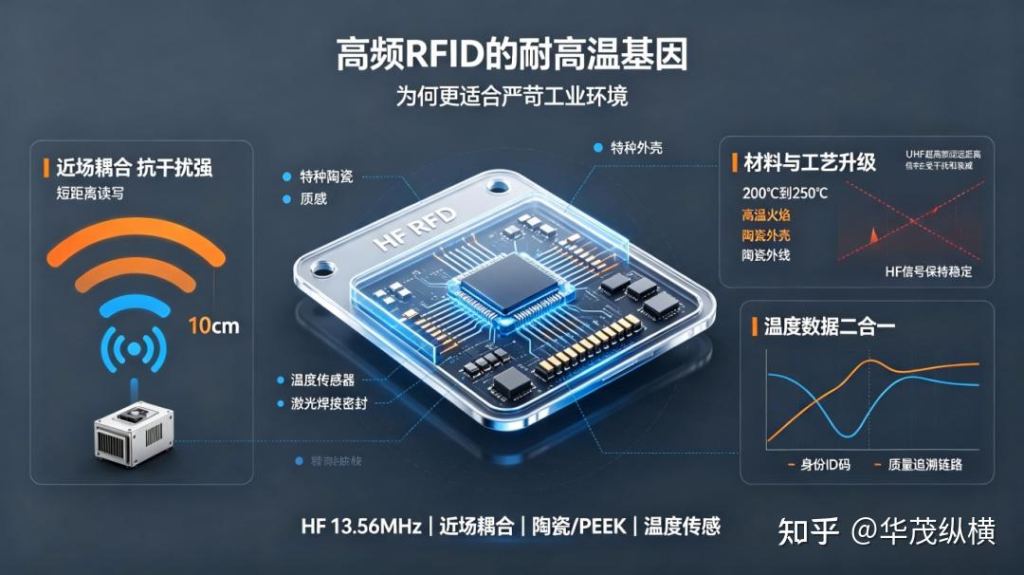
Compared to ultra-high frequency (UHF), high frequency (HF, 13.56MHz) RFID has a natural advantage in high-temperature industrial environments:
1.Near-field coupling and strong anti-interference: The read/write distance is usually within 10cm, which is not easily affected by the multipath effect caused by high-temperature metals, making it very suitable for dense metal environments.
2.Material and process upgrades: The shell is made of special ceramic/PEEK, which can withstand high temperatures of 200℃ or even 250℃ for a long time; the laser welding seal effectively prevents moisture penetration.
3.Temperature and data integration: Some high-end HF tags have built-in temperature sensors that can simultaneously collect temperature and identification data for process monitoring and quality traceability.
III. Scenario Demonstration:WELLAUTOthe"high temperature pain point"?
WELLAUTO, a company with many years of experience in the industrial RFID field , has proven the reliability of its solutions in multiple extreme environments:
Case 1: Automotive Electrophoresis Drying and Final Assembly
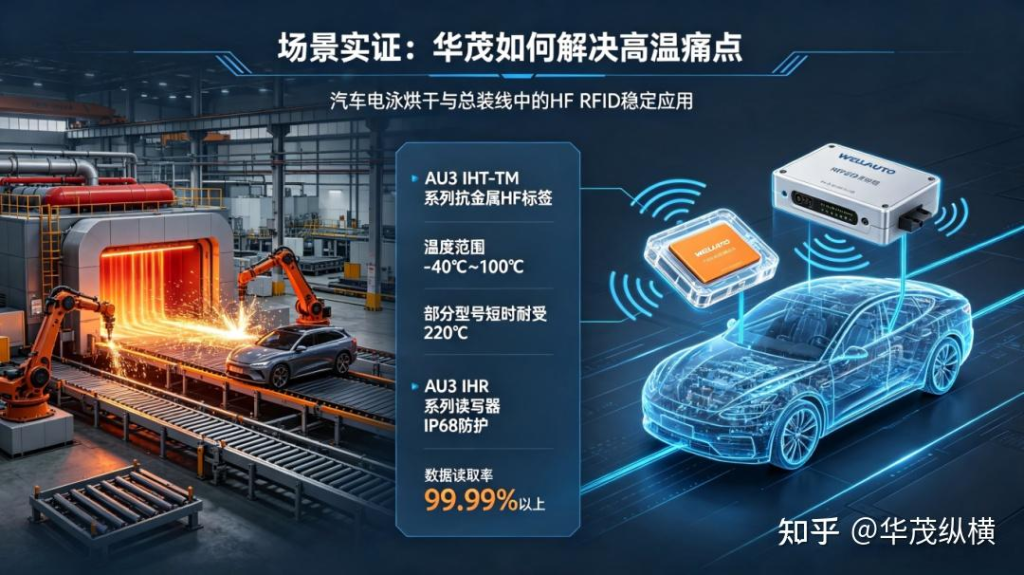
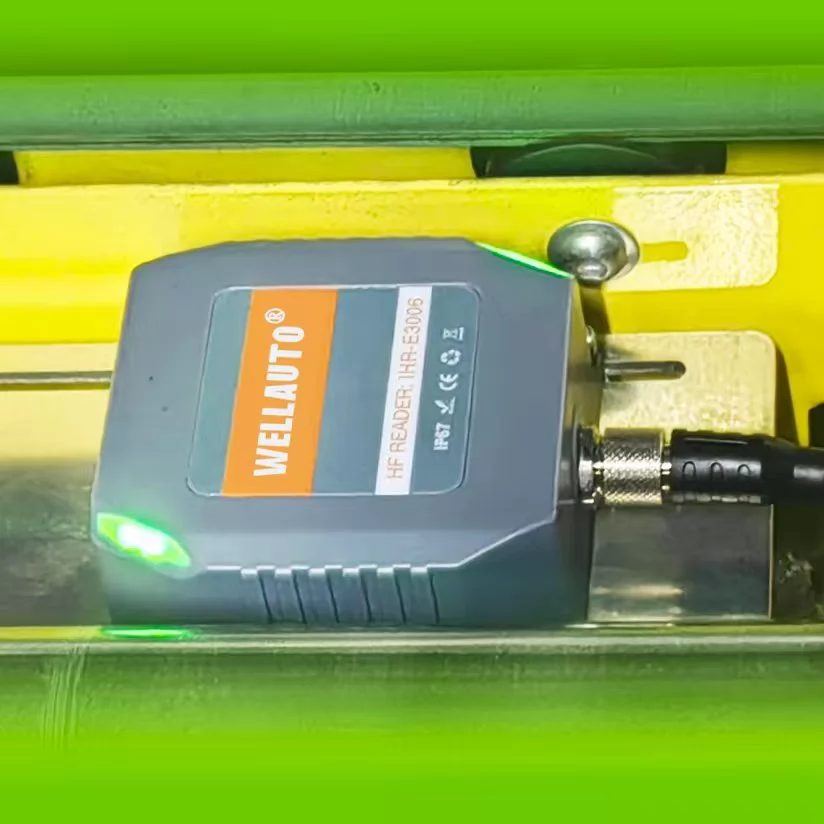
In the painting and final assembly processes of a certain OEM, traditional labels often fail due to the high temperatures and chemical agents in the electrophoretic drying oven.WELLAUTO utilizes its AU3 IHT-TM series anti-metal HF tags , leveraging their -40℃~100℃ temperature range (some models can withstand short-term temperatures of 220℃) , to successfully withstand the thermal shock of the drying zone. Combined with the AU3 IHR series readers (IP68 protection), even in environments with welding spatter from robotic arms, the data read rate remains consistently above 99.99%.
Case 2: SIP Sterilization in Biopharmaceuticals
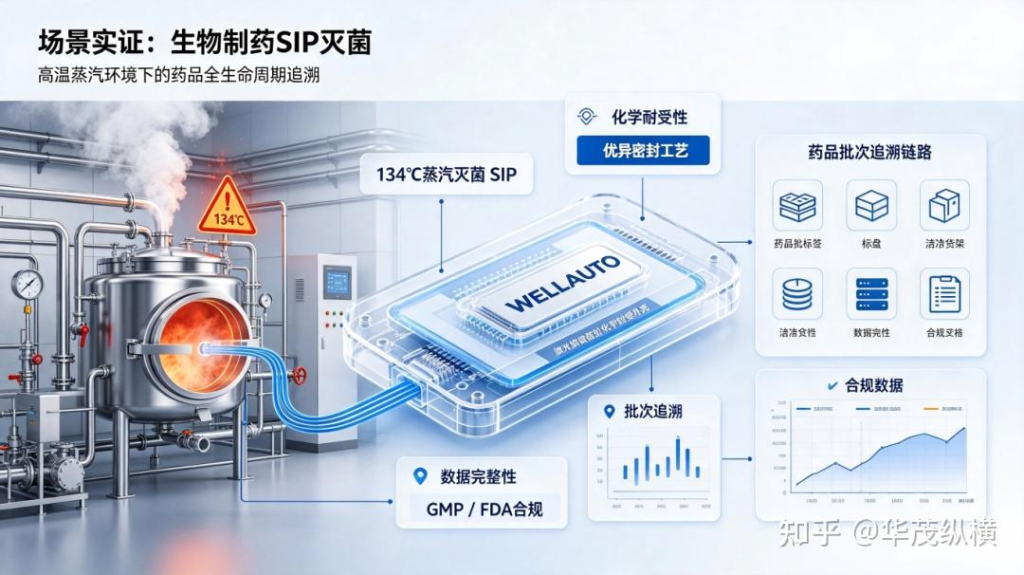
In response to the pharmaceutical industry's need for 134°C steam infusion (SIP) sterilization,WELLAUTO'shigh-frequency labels, with their superior sealing technology and chemical resistance, enable full lifecycle traceability of batch-to-batch drugs, meeting the stringent compliance requirements of GMP/FDA for data integrity.
IV. Selection Logic from an Engineering Perspective: Not Just "The Higher the Better"
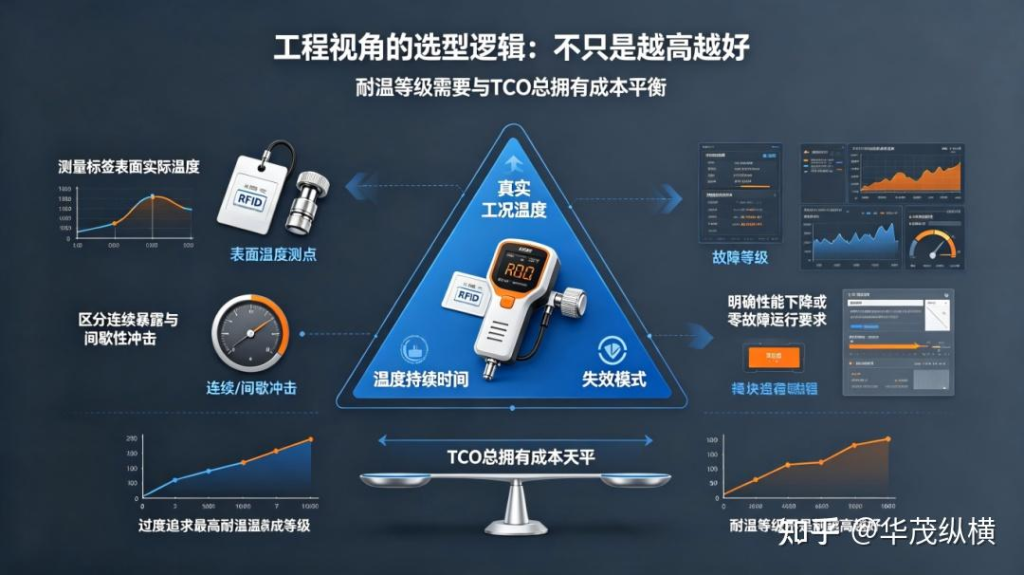
Temperature ratings are not simply about pursuing the highest possible value, but rather about balancing them with TCO (Total Cost of Ownership). From an engineering perspective, it is recommended to evaluate them from three dimensions:
1.Actual operating temperature: Focus on measuring the actual temperature of the label surface, rather than just referring to the ambient temperature;
2.Temperature duration: Distinguish between continuous exposure and intermittent impact; different operating conditions place significant differences in the requirements for materials and packaging.
3.Failure Mode: Determine whether gradual performance degradation is acceptable or zero-failure operation is required.
WELLAUTO'sR&D strategy is based on this, building a full range of RFID products from standard to high-temperature types, and combining field test data to help customers predict tag performance under different temperature curves before deployment, reducing trial and error costs.
V. Conclusion: Ensuring Data Reliability at High Temperatures
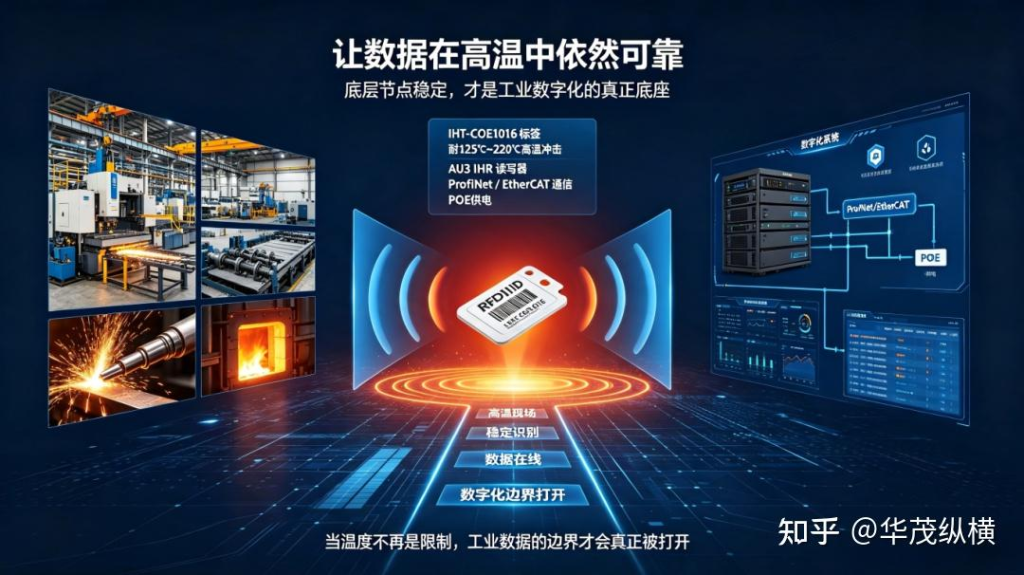
The digital transformation of industry relies on the stability of every underlying node. If a small RFID tag cannot withstand the test of high temperatures, even the best upper-level systems and algorithms are just castles in the air
As a national-level specialized and innovative "little giant" enterprise, WELLAUTO, deeply understands the complexity of industrial environments. They don't treat RFID as a general consumable; instead, they define their products in reverse, focusing on typical scenarios such as machine tools, painting, welding, and CNC cutting tools. Whether it's the IHT-COE1016 tag that withstands high temperatures of 125℃~220℃ or the AU3 IHR reader that supports ProfiNet/EtherCAT bus and is powered by PoE , they all address the same core issue— ensuring identification is unaffected by high temperatures and keeping data always online.
When temperature is no longer a limitation, the boundaries of industrial data will truly be opened up