
Bus temperature control is used in hot riveting machines
Solution November 5, 2025
Mechanical connections are used to fix two or more parts together through physical means (such as threads, rivets, pins, and clips). They are widely used in aerospace, automotive manufacturing, and building structures, and have advantages such as detachability, vibration resistance, and adaptability to different materials. Mechanical connections are mainly divided into threaded connections, riveting, pin connections, tenon joints, and interference fits
Hot riveting is used to connect thermosetting plastics to thermoplastic parts, or to connect plastic parts to metals
Hot riveting machine working process
Heating stage
When the pressure head comes into contact with the product, it begins to heat the product directly through an electric heating tube, high-frequency induction, or flame until it reaches the melting point, thus bringing the rivet to a plastic state
riveting
After the rivet softens, the pneumatic mechanism drives the rivet to press down, causing the rivet to deform
Solution
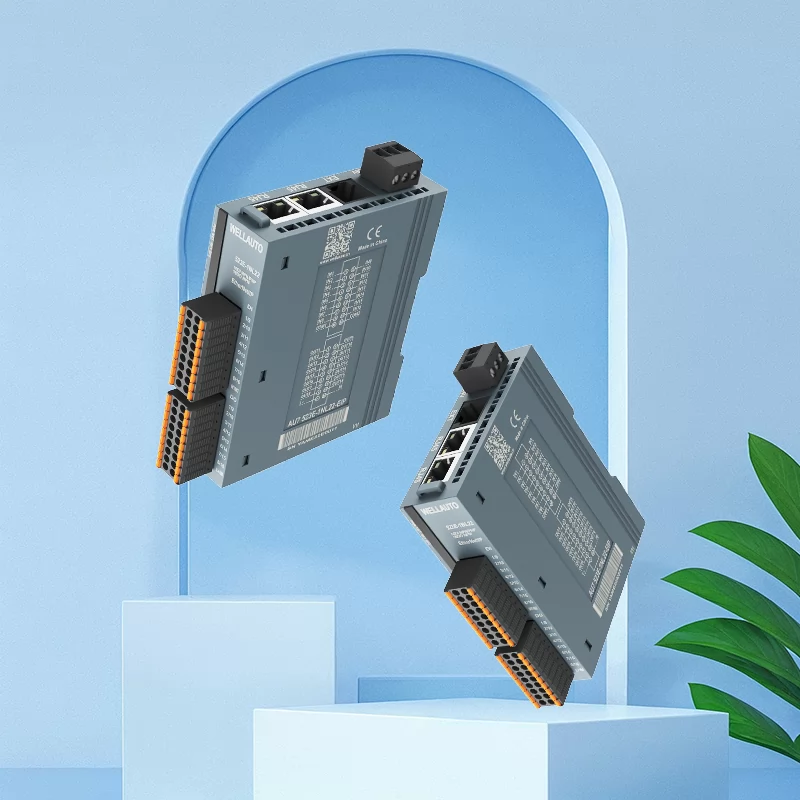
This solution uses a Siemens CPU, a bus temperature control module, and a touchscreen human-machine interface for control, with each cylinder's movement driven by pneumatic pressure. The Siemens CPU and the bus temperature controller are connected via the Profinet-RT bus communication protocol. The hot riveting machine uses multiple temperature controls; the high-capacity bus temperature controller system has a large capacity and high integration (40 temperature controls per station), and the main unit has 16 temperature acquisition channels and 16 heating output channels
Application effect
Cost saving
The built-in intelligent PID temperature control algorithm eliminates the need for PID programming, effectively shortening setup time. It is not limited by the host PID capacity, maximizing the performance of the Siemens CPU
Related Articles
![[Application Case] Optimization Solution for IP67-E Series Injection Pen Assembly Line](https://www.wellauto.net/wp-content/uploads/2025/12/2025122403413125.png)
![[Application Case] IO-Link solution applied to automotive seat assembly line](https://www.wellauto.net/wp-content/uploads/2026/03/2026041403585414.png)